


An In-Depth Analysis of Monetization Strategies in Leading Applications
The mobile app industry is a multi-billion-dollar marketplace, with millions of apps serving every kind of user need. But getting from a finished app to a profitable business takes more than user acquisition. Effective app monetization is essential for long-term success, and as competition grows, choosing the right monetization strategy matters more than ever.
In this blog, we analyze the most popular monetization strategies used by leading applications today: in-app purchases, subscription models, in-app advertising, the freemium model, and hybrid monetization. We also look at why app revenue optimization matters and share practical tips developers can use to maximize their revenue potential.
Why Monetization Strategies Matter in Mobile App Development
Monetization is the foundation of app sustainability. Without a reliable way to generate revenue, even the best mobile apps struggle to stay afloat. That is why developers today need to focus on app revenue optimization as much as they focus on user engagement.
Global mobile app revenue continues to grow across several monetization channels. What matters most, though, is choosing the right model for your app’s target audience, features, and long-term goals. The rules around app store payments are also changing: court rulings and new regulations in the US, EU, and UK now let many developers offer alternative billing or link users to web checkouts, with fee terms that are still evolving. Your monetization plan should account for these options.
So, how can you make sure your app earns enough revenue without alienating users? Let’s look at the key monetization strategies.
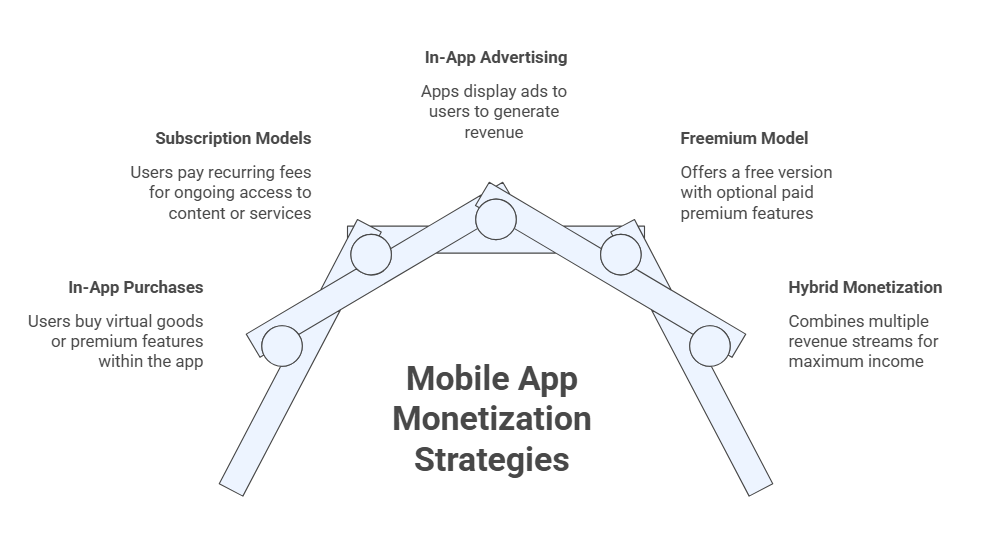
In-App Purchases: Unlocking Value Inside the App
In-app purchases (IAP) are one of the most popular monetization models for mobile apps, especially games and apps that offer premium content. Users download the app for free and can then buy virtual goods, extra features, or special content inside the app.
How it Works
- Virtual goods: In-game items, skins, power-ups, or exclusive content.
- Premium features: Basic services stay free, while users can pay for extras such as more storage or enhanced functionality.
In-app purchases work especially well in mobile games, social platforms, and fitness or productivity apps, where users are motivated to spend money to improve their experience.
Key Insights
- User engagement: Apps with compelling experiences or rewards, such as gaming rewards or exclusive features, tend to convert more free users into paying users.
- Simplicity is key: In-app purchases should enhance the experience without making the base app feel incomplete or locked behind a paywall.
- Payment options are expanding: In the US and several other markets, developers can now often point users to external web checkouts or offer alternative billing alongside Apple’s and Google’s systems. Fees and requirements vary by platform and region and are still changing, so review current store policies before you design your purchase flow.
IAP remains a key revenue driver for many of the top-grossing apps worldwide. When implemented well, in-app purchases can generate significant income while keeping users happy with a free-to-play approach.
Subscription Models: Building Long-Term Revenue
Subscriptions offer a steady, predictable source of income. Users pay a recurring fee to access premium content, features, or services. Subscription apps often offer free trials to attract users, then charge on a weekly, monthly, or annual basis.
How it Works
- Recurring payments: Users pay for continued access to premium features or services over time.
- Tiers of service: Many subscription apps offer tiered plans, so users can upgrade for more features, better service, or higher access levels.
Subscription models suit apps that deliver ongoing value, such as media streaming services, productivity tools, and education or fitness apps. Beyond steady income, this model builds user loyalty and engagement through long-term value.
Key Insights
- User retention: Subscriptions work best when the app consistently delivers high-quality content or services that keep users engaged.
- Conversion optimization: Make the move from free trial to paid plan smooth, and clearly show the app’s ongoing value. Limited-time offers or discounts can help boost conversions.
- Predictable revenue: Recurring income makes it easier to forecast earnings and plan future development.
- Transparency builds trust: Clear pricing, clear renewal terms, and an easy way to cancel reduce churn and complaints, and help you stay in line with app store rules and consumer protection requirements.
The recurring income from subscriptions also gives developers the financial stability to keep improving and updating the app.
In-App Advertising: Monetizing User Engagement
In-app advertising lets developers earn revenue by displaying ads to users. It is especially effective for free apps with a large user base. Common formats include banner ads, interstitial ads, video ads, rewarded ads, and native ads.
How it Works
- Ad formats: Apps can choose formats that fit the user experience, from non-intrusive banners to rewarded video ads that give users something in return for watching.
- Revenue models: Developers earn money per thousand impressions (CPM) or per click (CPC), and some ad networks also pay per install or action.
In-app ads generate revenue without asking users to pay directly. However, it is important to balance the volume and type of ads so they don’t frustrate users or hurt their experience.
Key Insights
- Ad targeting and privacy: Relevant ads based on user behavior, location, and interests can improve click-through rates and ad performance. Today, targeting must also respect privacy rules and user consent, such as Apple’s App Tracking Transparency (ATT) prompt on iOS and data protection laws like GDPR. Contextual targeting and first-party data are increasingly important as a result.
- User experience: Ads should never overwhelm or disrupt the app, especially in entertainment or social apps. Incentives such as rewards for watching ads keep users engaged without hurting retention.
Done right, in-app advertising can generate significant revenue while keeping the app free to download and enjoy.
The Freemium Model: A Balance of Free and Premium
The freemium model is one of the most widely used approaches. It combines free access to an app with the option to pay for premium features or content. Apps using this model typically offer core functionality for free and encourage users to upgrade for advanced features.
How it Works
- Free core experience: Users can enjoy a free version with some limitations.
- Premium features: Users can unlock premium tools, features, or content by upgrading to a paid version, often through a one-time purchase or a subscription.
The freemium model is especially popular in productivity apps, media apps, and games, where free content lets users try the app before they convert to paying customers.
Key Insights
- Value proposition: The free version must offer enough value to attract users, while the premium version must offer features worth paying for.
- Upselling: In-app upgrades or add-ons that directly improve the user experience drive conversion from free to paid.
- Balance: Locking too much behind a paywall can alienate users, while locking too little makes it hard to convince them to pay.
By offering a taste of the app’s value for free and a clear path to enhanced experiences, developers can build a large, engaged user base that supports long-term profitability.
Hybrid Monetization: Combining Multiple Revenue Streams
Many of today’s most successful apps use hybrid monetization. This means combining models such as in-app purchases, subscriptions, and ads within a single app to earn revenue from several sources. It lets developers serve different user preferences and optimize each revenue stream.
How it Works
- Multiple models: An app may be free with ads, while also offering in-app purchases or a subscription for premium features, such as an ad-free experience.
- Revenue diversification: Using several strategies helps developers balance revenue generation with user experience and reduces reliance on any single channel.
Hybrid monetization can be highly effective because it caters to different users. Some prefer to use the app for free with ads, while others would rather pay for premium features. Offering both creates a more balanced revenue stream.
Key Insights
- Comprehensive strategy: Successful hybrid monetization starts with understanding your user base and choosing a combination of revenue models that matches their preferences.
- Optimization: Test different combinations, such as ads and in-app purchases running in parallel, and adjust based on user data and feedback for better long-term profitability.
Final Thoughts: Maximizing Revenue with the Right Strategy
The app monetization landscape is diverse, and each strategy comes with its own opportunities and challenges. Whether you choose in-app purchases, subscriptions, in-app advertising, freemium, or a hybrid approach, the goal is the same: deliver real value to users while generating sustainable revenue.
To set your app up for success, treat app revenue optimization as an ongoing process of testing, iterating, and refining your monetization model. Keep an eye on app store policy changes as well, since new payment and billing options can affect your margins. Partnering with a mobile app development company experienced in monetization strategies can help you build an app that earns sustainable revenue and gives users an engaging, valuable experience.
FAQs
What is the best monetization strategy for mobile apps?
The best monetization strategy for your mobile app depends on the type of app you have and your target audience. Common models include in-app purchases, subscriptions, in-app advertising, and the freemium model. Many successful apps use a combination of these strategies to maximize revenue. Working with an experienced mobile app development company like App Maisters can help you choose the right approach based on your app’s goals and user base.
How do in-app purchases work in mobile apps?
In-app purchases (IAP) allow users to make purchases within the app, such as virtual goods, content upgrades, or premium features. These purchases are usually optional, with the base app being free to download, but users can enhance their experience by spending money. App Maisters can guide you through implementing IAP and help you optimize the user experience to boost conversions.
What are the advantages of using a subscription model in mobile apps?
The subscription model offers predictable and recurring revenue, which is particularly effective for apps providing continuous content or services. It encourages user retention by offering ongoing value, such as exclusive content, features, or services. App Maisters can help integrate a seamless subscription model into your app, ensuring a smooth user journey and maximizing your revenue potential.
What is the freemium model in app monetization?
The freemium model allows users to access basic features of an app for free but charges for premium features, content, or advanced functionality. This model helps attract a wide user base while providing opportunities for revenue generation from premium users. If you’re looking to implement the freemium model, App Maisters can help you create a balanced offering that encourages upgrades without alienating free users.
How do in-app ads generate revenue for mobile apps?
In-app advertising involves displaying ads within your app, such as banner ads, interstitials, or video ads. Developers earn money based on user interactions with these ads (clicks or impressions), and the revenue varies depending on the ad format and targeting. App Maisters can assist in integrating ad networks into your app and optimizing ad placements to enhance your revenue generation without disrupting the user experience.
What is hybrid monetization in mobile apps?
Hybrid monetization combines multiple revenue strategies, such as ads, in-app purchases, and subscriptions. This approach allows developers to cater to a wider audience and optimize revenue by leveraging various monetization channels simultaneously. App Maisters can help design a hybrid strategy that works best for your app, ensuring it generates revenue across multiple streams while maintaining a positive user experience.
How can app developers optimize revenue generation?
App revenue optimization involves analyzing user behavior, conducting A/B tests, and adjusting monetization models (e.g., pricing or ad formats) based on performance data. Continuous testing and refining strategies help maximize app revenue over time. With App Maisters expertise, you can optimize every aspect of your app’s monetization strategy, ensuring you’re getting the most value out of your app’s user base.